THE FRONTIER STATE / SOURCING BRIEF
FOR BLUEYARD CAPITAL · GP ROUND
A BlueYard sourcing case study · Tushar Kanade

Before they are legible.

Three clusters of physics-native founders on the hinge between a far better world and a far worse one. Plus the engine I would build to reach them first.

SIGNAL 00%  ·  move the cursor to resolve  ·  press L for full signal
SCROLL
00 The frame

The best founders are hardest to see at the moment they are cheapest to back.

Consensus is expensive by the time it is legible. A ZBLAN draw on the ISS, a viral counter-surveillance orb, a stroke-recovery device out of Brazil: each looked like a stunt or a science project before it looked like a category. BlueYard's manifesto asks for the two-sided bet, the technology that moves us toward utopia or holds the line against oblivion. This brief names three places that bet is live, the people carrying it, and how I would build a machine that meets them before the round, instead of chasing them after.

01Physics-native founders. Each of these people can do the derivation behind the deck. The moat is in the material, the signal, the current, the orbit.
02Radioactive-too-early. Contested physics, no round yet, or a round so small a first check still matters. The discomfort is the entry price.
03Found through relationships. A paper with one. A Foresight salon with another. A Media Lab bench with a third. That is the sourcing edge, and it is the whole point.
01

Digital minds & neurotech

Reading, repairing, and eventually rebuilding the brain
The bet

Two founders on the same frontier from opposite ends. One repairs the nervous system today with non-invasive stimulation. The other is writing the technical roadmap for emulating a brain at all, and building a therapeutics company to fund the path. The category runs from motor recovery to digital minds, and both entry points are contrarian.

Pre-round · early
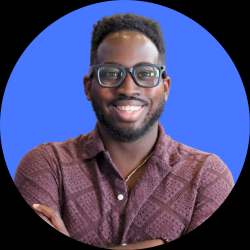
Duda Franklin, co-founder and CEO of Orby
Duda Franklin
Co-founder & CEO · Orby

Neuroscientist and biomedical engineer building non-invasive neuromodulation for motor recovery. Orby's device sits on the skin, sends patterned signals to the nervous system, and helps people with spinal-cord injury stand and take first steps, no surgery. Forbes Under 30 Brazil; now based in the Bay Area.

StagePre-institutional. Founded 2022; no priced round on file. A first check is a first check.
Why nowNon-invasive avoids the regulatory and surgical wall that slows invasive BCI. Consumer-adjacent rehab is a real, paying beachhead.
Watch itemClinical validation depth and a US regulatory path. I speak with her this week; this card is built to update.
How I know her: through Paulo Carvão, my co-author on the AI Infrastructure Triad. Duda, Paulo and I are co-writing a paper on neurotech regulation and governance for ACM AI Letters.
Pre-round · research-deep
Isaak Freeman, co-founder and CEO of Capable
Isaak Freeman
Co-founder & CEO · Capable

Building Capable, a rapid-iteration therapeutics company for human capability, starting with sleep and cognition. Separately, at MIT's Boyden lab, he co-authored the State of Brain Emulation Report 2025 and a worm-to-human scaling thesis: the reference roadmap for a field of fewer than 500 people worldwide.

StageEarly / stealth. The signal is the research standing and the caliber of people who vouch for him, ahead of any visible round.
Read it rightCapable is a therapeutics company. The emulation work is his research and his map of where the frontier goes next.
Why nowTotal basic-neuroscience funding is ~1% of NIH's budget. Any serious funder entering brain emulation has outsized leverage this early.
How I know him: met at the Foresight Institute AI Salon, San Francisco, May 26, 2026.
02

Counter-surveillance physical AI

Hardware that defends the analog conversation
The bet

As always-on recording spreads, the counter-position becomes a category. The physics here is publicly contested, and that contested physics is the bet. If it closes, the market is everyone who wants a room that cannot be recorded. If it does not, the founder is still one of the sharpest physics-native builders I have met.

Contested · seed
Aida Baradari, founder and CEO of Deveillance
Aida Baradari
Founder & CEO · Deveillance

Harvard physicist, ex-CERN researcher. Her device, Spectre I, scans for nearby microphones and emits signals that garble what recorders capture while humans still hear normal speech. The launch video passed four million views in 48 hours; pre-orders are open at a $1,199 refundable deposit.

The tensionCitizen Lab and others publicly doubt the microphone-detection and jamming physics. That dispute is the entry point. Cheap if it fails, category-defining if it closes.
Demand signalVirality plus paid pre-orders show the market wants this to exist. The open question is engineering, not appetite.
BackersO'Shaughnessy Ventures and Collaborative Fund on file; O'Shaughnessy Fellow ($100K).
How I know her: we met in Prof. Hugh Herr's Human 2.0 class at the MIT Media Lab, Spring 2023, building a robotic fifth limb.
03

Off-world industry

Making in orbit what gravity will not let us make here
The structure

Two companies, deliberately paired: the bet and the proof. The bet is a Luxembourg seed company raising in exactly your window. The proof is the UK company that made the category real in orbit and drew NATO-grade capital. You have priced this founder shape before: you partnered with Castelion at pre-seed and watched it raise a $100M Series A and a $350M Series B. Your aerospace shelf holds strike, signal, and observation. It does not yet hold orbital industry.

Read the ages right

I pressure-tested the premise that off-world founders skew senior. It fails. Space Forge began in 2018 as a pub conversation between two Thales Alenia colleagues; the registration cost £10 and the first office was a Bristol garage. Western had entered the industry only four years earlier. Varda was co-founded by a Founders Fund partner still in his twenties, paired with an ex-SpaceX engineer. The true pattern is a pairing: a young commercial founder sets the clock speed, while flight heritage concentrates in the CTO seat and on the cap table. Where a team is all heritage with no young engine, as at Flawless Photonics, the cadence follows the ISS schedule. That is the filter applied below.

The bet · seed, raising
not yet legiblethe portrait resolves
after the first meeting
Kyle Acierno, Olivia Borgue & Bruno Santos
CEO, Engineering & Science · Exobiosphere

The world's first contract research organization for drug discovery in orbit. Its Orbital High-Throughput Screener runs more than 2,000 automated experiments per mission and holds a payload slot on Vast's Haven-1, the first crewed commercial station, with a maiden mission scheduled for 2027. Founded in Luxembourg in late 2024; roughly twenty people; paying clients signed in year one.

Stage€2M seed (April 2025) led by Expansion Ventures with Expon Capital, a $1.4M extension led by Cedars-Sinai Technology Ventures, a $1M Meet the Drapers prize, and ESA backing via LuxIMPULSE. The CEO has said the next round opens in 2026. That is the entry window, at exactly your $500K–$5M check.
Why nowDrug discovery is the off-world product where the payload is grams and the deliverable is data. Small mass, high margin, repeat customers: the first orbital business with software-shaped economics.
Watch itemExecution risk sits with Haven-1's schedule and ground validation of the screener. Diligence the parabolic-flight results and the ESA milestones directly.
The BlueYard shapeAerospace hardware sold to Biology & Chemistry customers. It sits across two of your four sections at once.
How I found them: a structured sweep of the European microgravity pipeline while stress-testing this brief. No warm intro yet. Winning that first meeting is the job the engine below exists to do.
The proof · Series A
Joshua Western, co-founder and CEO of Space Forge
Joshua Western & Andrew Bacon
CEO & CTO · Space Forge

Semiconductor crystals grown on returnable satellites. ForgeStar-1 launched in June 2025 as the first UK-licensed in-space manufacturing satellite, and in December 2025 generated the first commercial plasma in orbit: the first free-flying commercial semiconductor tool ever operated in space. Bacon designed the payload that did it. Pridwen, the deployable heat shield, is the return piece ForgeStar-2 will exercise.

The proof point$30M Series A led by the NATO Innovation Fund (May 2025), the largest Series A in UK space-tech history; roughly $41M raised to date. World Fund, the Berlin climate fund, first backed them in 2021.
Read it rightWestern built the commercial engine after Thales Alenia business development and a UK Space Agency secondment. Bacon, the 2010 engineering graduate of the year and ex-head of advanced concepts at Thales Alenia UK, carries the plasma and re-entry heritage. Youth sets the clock; heritage sits in the CTO seat.
Role hereThe A is priced, so this card anchors the category as fundable and maps the founder shape. The early check goes to the bet above.
The geography note: German capital priced this category first. World Fund backed Space Forge from Berlin in 2021, and the NATO vehicle led the A. For a partnership anchored in Germany and the US, orbital industry is a home game.
The rest of the field, read straight
VardaAlready legible
$187M Series C in July 2025, roughly $329M raised, and a reported Series D in early 2026 near a $1.6B valuation. First fully commercial capsule re-entry, Utah, February 2024. The W-4 capsule was lost on re-entry in 2026, so the physics still bites. This is what the category looks like after consensus prices it.
Flawless PhotonicsWatched, held back
Real physics: 11.8 km of ZBLAN fiber drawn on the ISS in 2024, against prior attempts measured in meters, with orders around $1,000 per meter. The bench is all heritage: a founder who is chairman and CEO, a senior operating team, and a cadence set by ISS access. I moved it out of the founder spotlight for exactly that reason.
The return layerSecond thesis
Re-entry logistics is the picks-and-shovels position beneath all of this: Atmos Space Cargo and Space Cargo Unlimited in Europe, Varda's own capsules in the US. If the partnership wants a follow-on thesis from this room, it starts here.
04 The engine
THE FRONTIER STATE  · sourcing infrastructure

The engine is the thesis.

The founders above make a list. The reason I can name them, and the reason I will name the next twenty before their rounds, is a compounding machine I already run in prototype: media that pulls, capital-light capture that wins first look, and convening that deepens the relationship. Built to BlueYard's standard, and to BlueYard's advantage.

Layer 01
Media, which pulls

Public theses draw the right people toward me instead of me chasing them. The podcast runs in three formats; the Substack organizes into named Research Groups in the register of MIT Media Lab groups like Cyborg Psychology and Critical Matter.

Conversations
60-minute sessions, in person or virtual, structured. Prestigious operators and investors.
Dialogues
Long-form, 60–120 minutes and beyond. Looser, deeper, book-and-thesis driven.
Catalysts
Builders and researchers under 35. The pre-company talent, on record early.
Augmented
Human augmentation, wearables, the body as interface.
● Live series
Built & Unbuilt
The built environment and mobility; and the speculative futures of cities and humanity.
In development
Cortical
Digital minds, neurotech, and brain-computer interfaces. Maps to Cluster 01.
Dealflow cluster
Off-World & Counter-Surveillance
Orbital industry and the defense of the analog. Maps to Clusters 02–03.
Dealflow clusters
Layer 02
Capital-light capture, which wins first look

Small, fast, non-dilutive instruments that put the Frontier State in a founder's story before a priced round exists. Modeled on the fastest programs in the world, and tuned wider than any of them.

Frontier State GrantsH2 · first look
Fast, no-equity micro-grants of $10k–$25k, decided in days. The speed borrows from Emergent Ventures; the ceiling borrows from Cosmos Grants, then sizes up.
Reference: Emergent Ventures decides in ~2 weeks; Cosmos Grants run $1k–$10k. We move faster on the low end and pay more on the high end.
Frontier State FellowsH2 · cohort
A semi-annual cohort with a small stipend and a residency-lite. Spans the whole frontier instead of one vertical, which is the gap a physical-AI-only program leaves open.
Reference: Savant-style residencies give space and similar checks over a multi-week phase, but stay narrow. We go broad across every cluster above.
Layer 03
Convening, which deepens

Rooms turn a first contact into a relationship a screen cannot replicate. Branded to the standard of a16z, Khosla, and General Catalyst, and classier than DeepTech Week, which built real gravity in 18 months.

Frontier State DinnersH1 · monthly
Chatham House, 8–12 people, one provocative builder or researcher per table, themed on a single frontier. SF and Cambridge to start.
Proof: I ran invite-only Frontier State Conversations at Harvard through 2023–2024 with prestigious guests.
The Assembly + immersionsH3 · flagship
A flagship annual Assembly for the frontier-of-frontier, plus global founder immersions no other GP runs.
Proof: future-of-mobility roundtables at FTI Consulting, 2018–2020; Kennedy School immersions at the highest access points worldwide.
MEDIA pulls CAPTURE first look CONVENE deepens proprietary dealflow TO BLUEYARD
Media pulls. Public theses surface the right founders and route them toward the Frontier State by default.
Capture wins first look. Grants and Fellows put us in the story before a round exists.
Convening deepens. Dinners and the Assembly turn contact into relationship.
The loop compounds. Each turn makes the next easier, and BlueYard sees the best pre-company talent before consensus.
· Three horizons
H1 · Presence
Months 0–6
Turn my network and the circuit into first proprietary dealflow.
  • Launch Frontier State Dinners: Chatham House, monthly, SF and Cambridge.
  • Work the circuit as a scout: Deep Tech Week, Foresight and Cosmos salons.
  • Restart the Substack and podcast on the new Research Group structure.
Directional target: figures I will set with the partnership.
H2 · Pull
Months 6–18
A recognized series, so inbound begins to replace the chase.
  • Scale Dinners into a named, waitlisted series across SF, Cambridge, and a European node.
  • Launch Frontier State Grants and the first Fellows cohort for first look.
  • Open a Catalysts salon for pre-company lab and PhD talent.
Directional target: figures I will set with the partnership.
H3 · Gravity
Months 18–36
Convening power as a proprietary access moat for the fund.
  • A flagship annual Assembly for the frontier-of-frontier.
  • Global founder immersions no other GP runs.
  • The loop compounds; talent arrives on its own.
Directional target: figures I will set with the partnership.
05 My edge

Networks most partners cannot buy, built for a geography-free fund.

India
A live network on the ground.
Born and raised there; I led the world's first government-funded hyperloop initiative inside a Chief Minister's Office. Voyager evaluated deals there and its company Mitti Labs deploys across five Indian states. No BlueYard partner holds this.
Harvard & MIT
The rooms where I found all three clusters.
A Media Lab bench with Aida, a Foresight salon near Isaak, a paper with Duda. Across Boston and the Bay, the university ecosystems are where pre-company talent is legible before it is fundable.
Global access
Kennedy School immersions at the top.
Hosted by the Yamauchi family, Nintendo's founders, in Tokyo; inside prime ministers' offices across the Balkans; through China, Thailand, and the Gulf. The relationships heads of state extend; cold email does not reach them.
Built for the model
Travel-heavy is the feature.
BlueYard's geography-free, travel-heavy approach is the one most VCs avoid. It is the one I have run for a decade, from ministers' farmhouses to consortium tables from Russia to Italy. You go to them.
Proof: Frontier State Conversations · invite-only at Harvard · 2023–2024 Proof: future-of-mobility roundtables · FTI Consulting · 2018–2020 Proof: ~$500M provisional allocation · Maharashtra CMO · consortium incl. Richard Branson
06 The close

Ideas first. Money second, as access.

That is the argument in Paul Graham's Cities and Ambition, which my next podcast takes apart with a philosopher: power flows from ideas, and the city tells you which ideas it rewards. Curation is where ideas and founders meet. The rooms give me the ideas, the ideas bring the founders, and the engine becomes the thesis. I would like to build it here.

Receipts · every claim above traces to one of these
  • blueyard.com: track record (Castelion pre-seed, $100M A, $350M B), four sections, $500K–$5M pre-seed to A model. Accessed Jul 2026.
  • Space Forge + World Fund releases, May 14, 2025: $30M Series A led by NATO Innovation Fund; World Fund first backed 2021.
  • spaceforge.com mission log, Jun 2025 to Mar 2026: ForgeStar-1 launch on Transporter-14, first UK CAA in-space manufacturing licence, Pridwen plan.
  • Space Forge, Dec 2025: first commercial plasma in orbit; first free-flying commercial semiconductor tool. Payload credited to Bacon on the team page.
  • Space Forge totals: Tracxn $40.9M; PitchBook $39.2M (2026). Site says roughly $41M.
  • Millennial Masters interview, Feb 2025: pub origin, £10 registration, Bristol garage, 70-plus team.
  • Varda: CNBC, Jul 10, 2025 ($187M C); mission log per Wikipedia, 2026 (W-1 Utah re-entry Feb 2024; W-4 lost 2026); Series D figure per Clay dossier, verify before quoting aloud.
  • Flawless Photonics: SpaceNews Feb 2024; The Register Apr 2024 ($1,000/m orders); Electro Optics Oct 2024 (11.8 km); New Space Economy profile Feb 2026 (senior bench).
  • Exobiosphere: Startup Luxembourg Apr 2025 (€2M seed); Forbes Luxembourg Jun 2026 (Haven-1 2027, next round, Cedars-Sinai extension); med-tech.world Apr 2026 ($1M Drapers prize).
  • Founder backgrounds: spaceforge.com/team and about-us; theorg.com (Western at Thales from 2014).